
As the global economy accelerates toward electrification and decarbonization, one industrial metal has emerged as the backbone of the transition: copper. Once viewed as a cyclical commodity tied to construction and manufacturing, copper is increasingly being described as “the new oil” — an essential resource whose scarcity could reshape world markets, national policies, and investment strategies.
Bank of America, Goldman Sachs, the International Energy Agency (IEA), and several global mining executives have warned that the world is entering a historic copper supply crunch. With inventories at near-record lows and demand exploding across renewable energy, grid upgrades, electric vehicles, AI data centers, and semiconductor manufacturing, analysts say the world could face a structural shortage by mid-decade.
Some estimates — once considered extreme — now argue that copper could reach $15,000 to $20,000 per metric ton by 2025 or shortly thereafter.
Inventories at 15-Year Lows: “Just Three Weeks of Cover”
Bank of America commodity strategist Michael Widmer sounded the alarm in a detailed market note. He explained that visible global copper inventories across major exchanges — the LME, COMEX, and Shanghai — have collapsed to levels last seen in 2006–2007, a period that preceded a major price spike.
Current stocks are so depleted that they cover just over three weeks of global consumption. In an industry where supply chains are slow, capital-intensive, and vulnerable to geopolitical risk, such thin inventory levels can trigger extreme price volatility.
Widmer warned that the copper market is on the brink of violent backwardation, where spot prices surge far above futures due to immediate scarcity. He compared the current setup to the nickel crisis of 2006–2007, when LME warehouse shortages triggered a 300% price surge, culminating in a short squeeze that forced industrial consumers into panic buying.
How Low Could Inventories Go? Some Analysts Say “To Zero.”
Widmer’s forecast suggests copper could hit $13,000/t in the near future after recently crossing $10,000 for the first time in a decade. But under a more extreme scenario — where scrap supply fails to increase — the Bank of America team warned that inventories could be exhausted entirely within three years.
If that happens, prices could explode well beyond $20,000 per ton, a level that seemed inconceivable just a few years ago.
The key swing factor is recycled material. Copper scrap entering smelters is expected to rise from 4.2 million tonnes in 2016 to 6.7 million tonnes by 2025. But the scrap industry is fragmented, opaque, and heavily influenced by regional regulations. If recycling output doesn’t scale, primary production won’t be able to fill the gap.
“Copper Is the New Oil”: Energy Transition Creates Structural Demand
Global demand for copper is no longer driven solely by construction and consumer goods. Instead, the energy transition is rewriting consumption patterns:
Electric vehicles require up to 4× more copper than internal combustion cars.
Charging infrastructure and renewable power grids are massively copper-intensive.
Offshore wind farms use nearly 8 tons per megawatt, much higher than traditional power.
AI data centers and semiconductor fabs require huge volumes of copper wiring and power cabling.
David Neuhauser of Livermore Partners told CNBC that these trends fundamentally change the commodity landscape:
“Copper is the new oil. For the next decade, copper looks tremendous — with real potential to hit $20,000 per metric ton.”
Major investment banks agree. Goldman Sachs called copper “the strategic metal of the global economy” in a widely cited report titled “Copper Is the New Oil.” The International Energy Agency also warned that copper shortages could slow global decarbonization efforts, stating that renewable energy systems use twice to six times more copper than fossil fuel infrastructure.
Mining Can’t Keep Up: Years of Underinvestment Take Their Toll
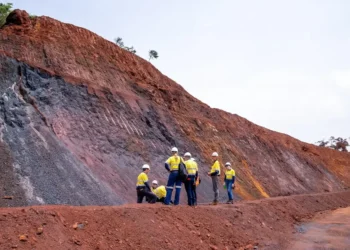
Copper supply is notoriously difficult to expand. Even after a discovery, it takes 10–15 years to permit, build, and commission a mine. Meanwhile:
Chile and Peru — the world’s top two producers — face declining ore grades, water shortages, and social unrest.
New environmental rules make permitting in North America and Europe slow and contentious.
Large deposits like Pebble (U.S.), Dominga (Chile), and Resolution Copper (U.S.) remain stalled by politics.
Major mining companies have shifted away from risky mega-projects after a decade of poor returns.
Widmer emphasized that “the fundamental environment is incredibly tight,” and those constraints cannot be solved quickly. Without a major injection of capital into new copper mines — something many investors have been reluctant to finance — shortages could intensify through the 2030s.
Market Outlook: A Tight Rebalance Followed by a Second Deficit Wave
Bank of America expects supply deficits to persist through 2021–2022, then briefly rebalance in 2023–2024 as a few new mines come online. But by 2025, a second and deeper deficit is expected as electrification ramps sharply.
Meanwhile, copper prices have surged more than 30% year-to-date, recently touching $4.54 per pound ($10,000 per ton), driven by stimulus spending, infrastructure programs, and a weaker U.S. dollar.
HSBC analysts noted that global commodity prices have risen 80% since April 2020, with copper among the biggest beneficiaries of investment tied to net-zero policies.
Wall Street, Miners, and Governments Are Paying Attention
The possibility of $15,000–$20,000 copper is no longer viewed as speculative:
Freeport-McMoRan, the world’s largest publicly traded copper miner, has stated that the market is “critically tight.”
Glencore CEO Gary Nagle warned in 2024 that the world was heading for a “massive copper deficit” without radical action.
S&P Global released a landmark study predicting a copper gap of up to 10 million tonnes per year by 2035 — the largest in modern history.
Governments are beginning to respond. The U.S. and EU have both designated copper as a “strategic mineral,” and new policies encourage domestic refining and recycling. China has accelerated its copper stockpiling programs, further tightening global supply.
Investment Implications: Juniors Could Ride a Wave of Capital
Livermore Partners’ Neuhauser said that the biggest upside may come from small-cap mining companies:
“There are many small companies with huge production potential and very attractive valuations. If copper reaches anywhere near $20,000, these firms could see massive returns.”
Commodity funds have begun rotating from gold into copper producers and exploration companies, anticipating a long-lasting supply shortfall.
The Bottom Line: A Metal That Will Define the Next Decade
Copper’s story is no longer just about industrial demand. It has become central to global energy policy, climate change goals, and geopolitics.
If recycling fails to scale, if new mines remain stalled, or if electrification accelerates faster than expected, copper could become the bottleneck that shapes the entire clean-energy economy.
Prices of $20,000 per ton — once seen as highly unlikely — now sit squarely within mainstream analysis.
The world may not literally “run out” of copper, but it could run out of readily available copper. And in commodity markets, that distinction can mean the difference between stability and a supercycle that rewrites economic history.