A US Supreme Court decision striking down President Donald Trump’s sweeping global tariffs has injected fresh uncertainty into global trade — but in Beijing, the ruling is widely viewed as a strategic win.
The court determined that Trump overstepped his authority by using the International Emergency Economic Powers Act (IEEPA) to impose broad tariffs on nearly all major trading partners, including China. The decision dismantled one of the administration’s most aggressive economic tools just weeks before a high-stakes summit between Trump and Chinese leader Xi Jinping in Beijing.
Although the White House quickly sought to restore a 15% global tariff under a separate trade statute — a move that requires congressional approval within 150 days — the legal setback has weakened Washington’s negotiating posture at a sensitive diplomatic moment.
A Blow to Washington’s Leverage
Since returning to office, Trump has leaned heavily on tariffs as a central pillar of US economic diplomacy, arguing that aggressive trade barriers would rebalance supply chains and pressure rivals. The Supreme Court’s ruling disrupts that approach, signaling limits on executive power and complicating future tariff threats.
For China, the timing could hardly be better. The decision removes immediate tariff pressure while preserving Beijing’s own retaliatory tools. Chinese commentators framed the ruling as evidence that the United States faces internal constraints that China does not.
Hu Xijin, the former editor of the nationalist state-backed Global Times, wrote on Chinese social media that Washington had effectively “lost a card,” while Beijing retained its leverage. The message resonated with a domestic audience that has endured years of escalating trade friction.
Years of Preparation
China’s relative confidence is not accidental. Since the first US-China trade war erupted in 2018, Beijing has methodically reduced its exposure to American pressure. It diversified agricultural imports away from US soybeans and corn, expanded trade ties across Southeast Asia, Latin America, and the Middle East, and strengthened domestic manufacturing capacity.
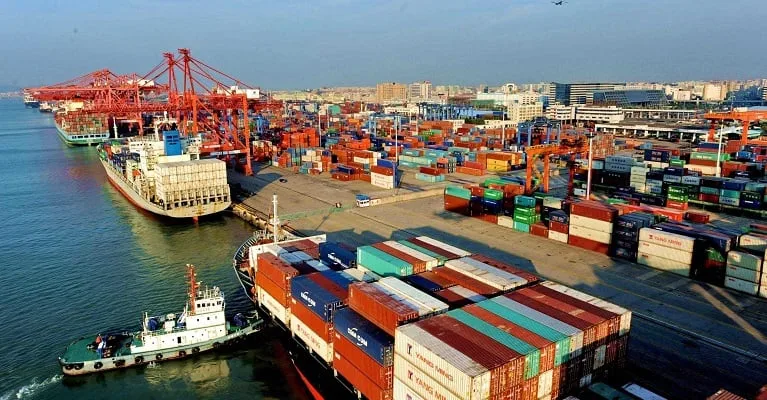
The result has been striking. China recorded a record $1.2 trillion trade surplus last year, driven in part by rerouting exports through alternative markets. While US allies such as Japan and South Korea rushed to negotiate investment pledges and trade concessions in exchange for tariff relief, China largely refused to capitulate, instead matching US measures with tariffs of its own.
This posture has allowed Beijing to frame itself as resilient — even indispensable — within global supply chains.
The Rare Earth Card
Beyond tariffs, China holds another critical pressure point: rare earth minerals. The country dominates the global processing and refining of these elements, which are essential components in everything from smartphones and electric vehicles to advanced defense systems such as the F-35 fighter jet.
In recent months, Beijing has tightened export controls on rare earths and specialized magnets, signaling its willingness to weaponize supply chain dominance if trade tensions escalate further. The restrictions rattled US manufacturers and defense planners, underscoring how dependent critical industries remain on Chinese inputs.
The Supreme Court ruling now shifts the dynamic. Without the immediate threat of sweeping tariffs, Washington’s leverage narrows, while Beijing’s control over strategic materials remains intact.
A Complicated Summit Ahead
The upcoming Trump–Xi summit is expected to cover not only trade but also technology restrictions, semiconductor policy, and Taiwan. With tariff authority legally constrained, Trump may enter talks needing alternative bargaining chips.
At the same time, uncertainty persists. The administration’s attempt to reimpose temporary tariffs under a different statute keeps the possibility of renewed trade friction alive. Markets and governments alike are waiting for clarity on whether Congress will endorse the new measures or whether further legal challenges will follow.
Still, the immediate perception is that Beijing has gained breathing room. The Supreme Court’s intervention has not resolved US-China tensions, but it has recalibrated the balance of power at a delicate moment in the rivalry between the world’s two largest economies.
For now, China appears to have emerged with its strategic options intact — and Washington’s most forceful economic weapon blunted.