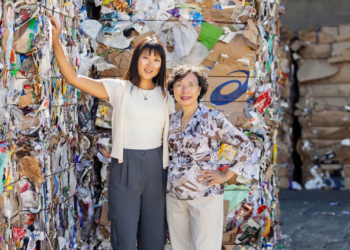
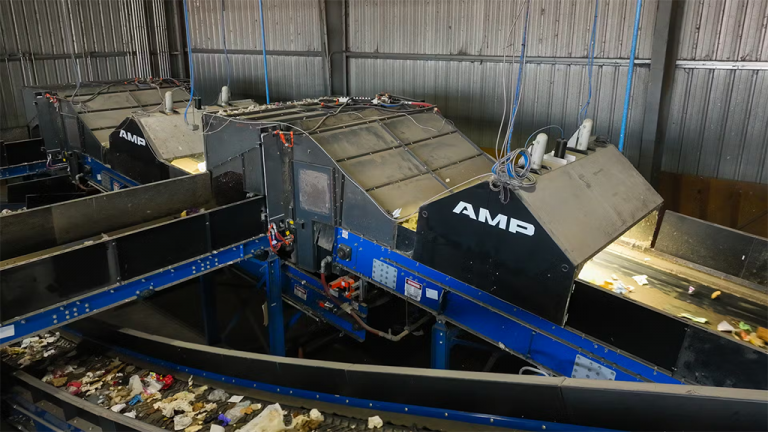
Portsmouth, VA — AMP has completed a major upgrade to its waste-processing facility supporting the Southeastern Public Service Authority, advancing a regional strategy to boost recycling and organics handling while reducing reliance on landfills.
Expanded capacity and system scope
The upgraded Portsmouth facility now processes up to 108,000 tons of municipal solid waste annually. This increase is part of a 20-year plan signed in late 2025 with SPSA that covers eight member communities and about 1.2 million residents. The broader system adds additional MSW sortation lines and an organics-management subsystem, with a full-scale capacity target of roughly 540,000 tons per year when fully deployed.
Goals and expected outcomes
The integrated setup is designed to recover more recyclables and reduce the volume sent to the regional landfill. SPSA-delivered waste is expected to be diverted through AMP facilities, with at least half of the material routed for processing across the system.
Economic and regional impact
The upgrades represent a significant investment in South Hampton Roads, creating around 100 local jobs and reinforcing the region’s position as a center for modern waste-diversion technology. The arrangement also aims to extend the life of the Regional Landfill and strengthen collaboration between AMP and SPSA.
Looking ahead: additional facilities and carbon-management initiatives
Two more facilities are planned in Portsmouth. A second sortation plant is slated for online by late 2027 to further separate recyclables and organics from MSW. A nearby third facility will process captured organics into biochar using indirect heating, a product that can sequester carbon and generate carbon credits.
In a broader climate effort, AMP has a collaboration with Google intended to support carbon-removal milestones, including a target to remove 200,000 metric tons of CO2e by 2030. The biochar initiative is designed to increase capacity for diverting organic waste from landfills—up to five million tons over the next two decades—from waste streams and into carbon-removal products.
Regional significance and future potential
Collectively, the upgrades and planned expansions establish a scalable model for regional waste management—boosting recycling, extending landfill life, and offering a blueprint for other communities pursuing sustainable, long-term waste solutions.