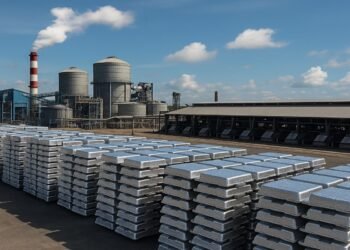
As of April 5, 2026, aluminium markets are balancing tight energy costs with ongoing manufacturing demand and the shift toward lightweight materials for energy transition applications. The LME tone remains cautious as buyers and producers weigh power contracts, smelter margins, and supply discipline. In China, policy signals and industrial activity influence near‑term demand, while longer‑term fundamentals lean on automotive and grid‑related uses of aluminium.
📉 Short-Term Pressure and Price Direction
Near term, energy costs and smelter power contracts remain the dominant driver of margins. Aluminium prices on the LME may oscillate as buyers defer activity and producers calibrate supply. Seasonal patterns and restocking cycles in key markets add to volatility, though the overall tone remains cautious. If power prices ease, inventories disciplined by producers could provide modest upside; if they rise, downside risks could reemerge.
- Energy and carbon costs are the main determinant of smelter margins.
- Near-term demand signals from construction and packaging can support a floor in prices.
- Volatility is likely to persist until there is clearer visibility on energy markets and stimulus in China.
📊 Market Activity and Sentiment
Trading volumes on the LME have steadied after a choppy winter, with price action driven by energy outlooks and stock levels. The nearby curve remains sensitive to energy news and regional premiums. In the physical market, premiums to the LME continue to reflect transport costs and local demand, particularly in Asia and Europe. Market sentiment is cautious, balancing hopes for restarts in supply with concerns about demand softness in late cycle sectors.
- Inventory levels on exchange and in bonded storage influence pricing expectations.
- Premiums to the LME vary by region, tracking power costs and logistics.
🌍 Macro and Geopolitical Influence
Macroeconomic forces, energy markets and geopolitics shape aluminium demand and price direction. Global power prices and carbon policies remain a key variable for smelter costs and margins. China’s growth trajectory, stimulus measures and the pace of manufacturing activity influence aluminium usage in vehicles, packaging and infrastructure. Trade and shipping costs, along with currency moves, can amplify price swings. The energy transition keeps long‑term demand resilient, even as near term cycles fluctuate.
- China’s policy signals and stimulus timing influence industrial activity and aluminium usage.
- Energy prices, carbon policies and currency moves can amplify price volatility.
🏗 Supply Outlook: Structural Support Remains
Structural forces underpin a longer run of supportive fundamentals for aluminium. Smelter capacity remains disciplined in many regions, with retirements or conversions aligning to cheaper, cleaner electricity. New capacity grows selectively in regions with abundant renewable power or low-cost energy, reinforcing supply resilience. Materials demand tied to lightweight transport, wind and solar infrastructure, and grid storage supports a steady base of consumption. While near-term disruptions can occur, the long‑term story for supply is skewed toward reliability and energy‑leadership aligned with the transition.
- Supply discipline and retirements support a stable longer‑term outlook.
- New capacity favors regions with affordable, clean electricity and stable feedstock costs.
- Demand from EVs, renewable energy, and infrastructure fosters a steady base for aluminium use.
🧠 Market Outlook
The base case envisions a gradual, range‑bound period for aluminium prices with cautious upside in the second half if energy costs stabilize and Chinese demand improves. Risks include higher power prices, tighter shipping costs, or renewed policy tightening in large economies. Scenarios:
- Baseline: range‑bound trading as suppliers and buyers find equilibrium, with gradual demand support from autos, packaging and aerospace.
- Upside: energy costs soften, China stimulus nudges manufacturing higher, or new infrastructure programs lift aluminium usage in power grids and transport.
- Downside: energy constraints persist, or demand softens due to macro weakness in major regions.
🔎 Bottom Line
Aluminium markets in early 2026 face a cautious yet constructive setup. Energy costs and China demand will continue to steer near‑term moves, while the longer‑term outlook remains anchored by energy-transition needs and lightweight applications. Expect gradual price action, supported by supply discipline and resilient demand from automotive and infrastructure projects, with upside potential contingent on energy market stability and policy signals.