The Federal Reserve is expected to lower interest rates again on Wednesday, even as an unusual level of disagreement has emerged among senior policymakers over how much support the slowing US economy truly needs.
The upcoming decision is shaping up to be one of the Fed’s most difficult in years. Officials are still navigating the aftershocks of a historically aggressive tightening cycle, a sluggish labor market, and renewed inflation pressures linked in part to President Donald Trump’s expanded tariffs on major trading partners. Analysts from JPMorgan, Morgan Stanley, and Oxford Economics say the committee’s internal split has widened in recent months — a contrast with the broad consensus that guided the Fed through much of the post-pandemic recovery.
A Policy Debate With No Easy Answers
The Federal Reserve’s dual mandate — price stability and maximum employment — has become harder to balance. Hiring has remained soft throughout 2025, with job creation heavily concentrated in health care and government, according to Labor Department data reviewed by Reuters. Broader indicators, such as rising unemployment durations and falling job openings, have reinforced concerns that the labor market is losing momentum.
Some Fed officials worry that failing to ease policy further could risk a deeper labor downturn. Chicago Fed President Austan Goolsbee and Governor Christopher Waller have argued that “downside risks to employment are becoming more pronounced,” echoing comments from private-sector economists who warn the current slowdown resembles the early stages of past recessions.
But other officials warn that cutting rates too aggressively could allow inflation to linger above the Fed’s 2% goal. Several central bankers — including Dallas Fed President Lorie Logan and Cleveland Fed President Beth Hammack — have pointed to fresh evidence from the Commerce Department showing that goods inflation has edged up again this fall, partly due to the administration’s new tariffs on steel, autos, and a wide range of Chinese components. Goldman Sachs estimates that tariff-related price pressures could continue into 2026.
Leadership Transition Adds Uncertainty
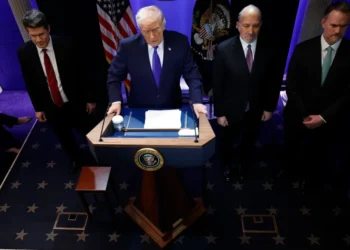
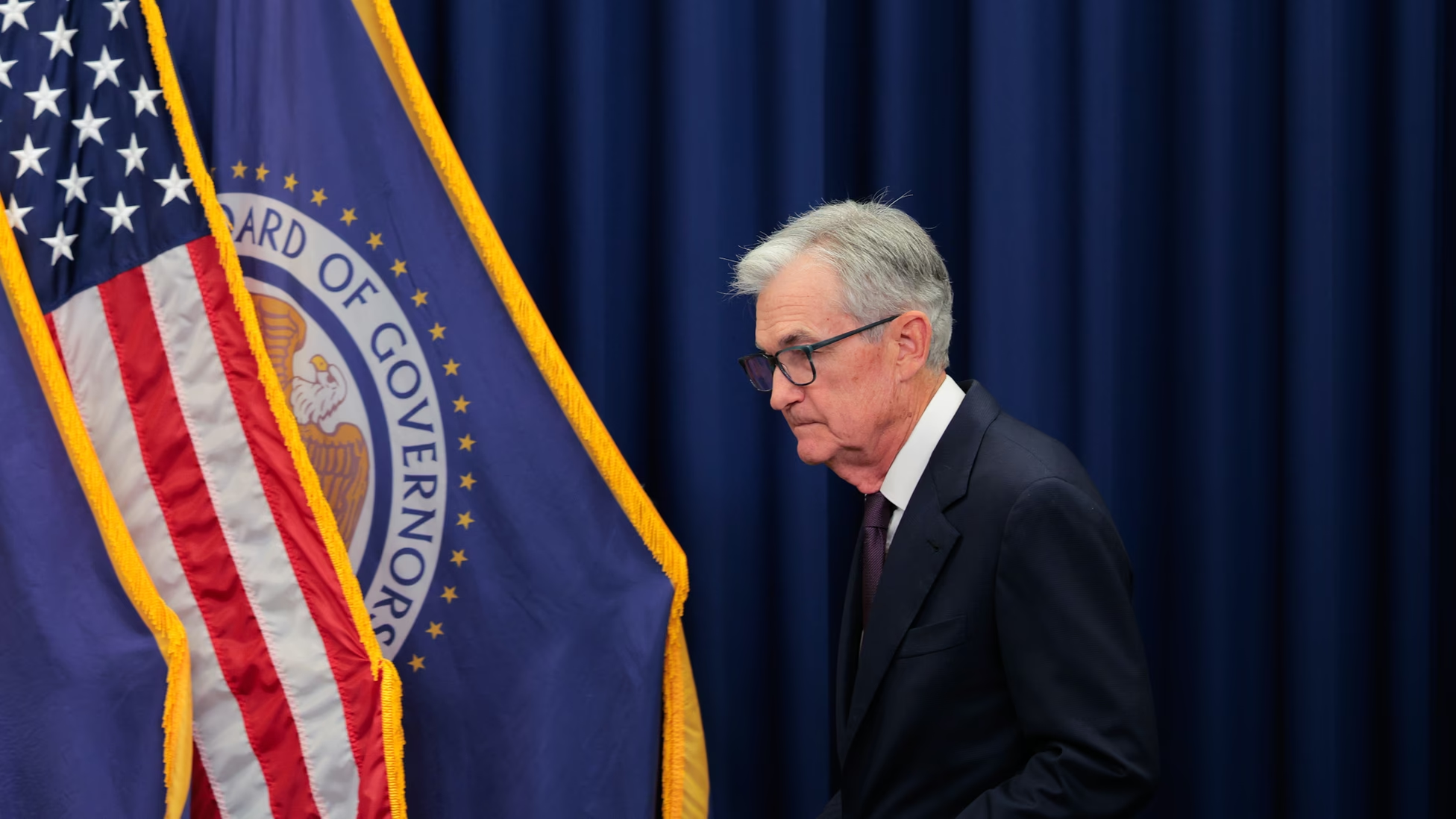
Adding to the tension is the impending change at the top of the central bank. This month’s meeting will be Chair Jerome Powell’s final gathering before President Trump announces his nominee to lead the Federal Reserve. According to reporting from the Wall Street Journal and Bloomberg, Treasury Secretary Scott Bessent is conducting a broad search, with several conservative economists and current Fed officials considered possible contenders.
Powell’s term ends in May, but Trump has signaled he may announce a successor earlier than usual, raising questions about how quickly the Fed might shift its policy framework under new leadership.
Limited Data, Big Decisions
Complicating the November deliberations is a lack of timely economic data. Due to the recent government shutdown, detailed reports on employment and inflation for October and November are only now being released, leaving policymakers without the full picture they would normally have when making a rate decision. Early readings have been inconclusive: a delayed September jobs report showed a sharp rebound in hiring but also a higher unemployment rate — a combination that several Fed watchers describe as “confusing but not reassuring.”
Economists at Edward Jones and Bank of America say the Fed will likely respond by cutting rates while issuing unusually cautious guidance. The central bank will also publish its updated economic projections, including the closely watched “dot plot,” which analysts expect will show only a small number of reductions planned for 2026.
Inflation Risks Still Loom
Although inflation has eased significantly from its 2022 peak, progress has slowed. A number of Fed officials worry that reducing borrowing costs again could undo some of the gains made over the past year. Logan, speaking in Zurich last month, said she would “find it difficult to cut rates again unless there is clear evidence that inflation is declining faster than anticipated.”
Economists at Comerica Bank and Moody’s Analytics note that tariff-related price increases could peak next year, potentially limiting how far the Fed can ease without rekindling inflation.
What Comes Next
If policymakers follow market expectations and deliver another quarter-point reduction, the benchmark federal-funds rate would fall to its lowest level since late 2022. Investors remain divided on whether additional cuts will follow. Futures markets tracked by CME’s FedWatch tool show expectations split between one more reduction in early 2026 and a prolonged pause.
The Fed will announce its decision at 2 p.m. ET, followed by Powell’s press conference at 2:30 p.m. ET, where he is expected to address both the economic outlook and the uncertainties surrounding the central bank’s leadership transition.