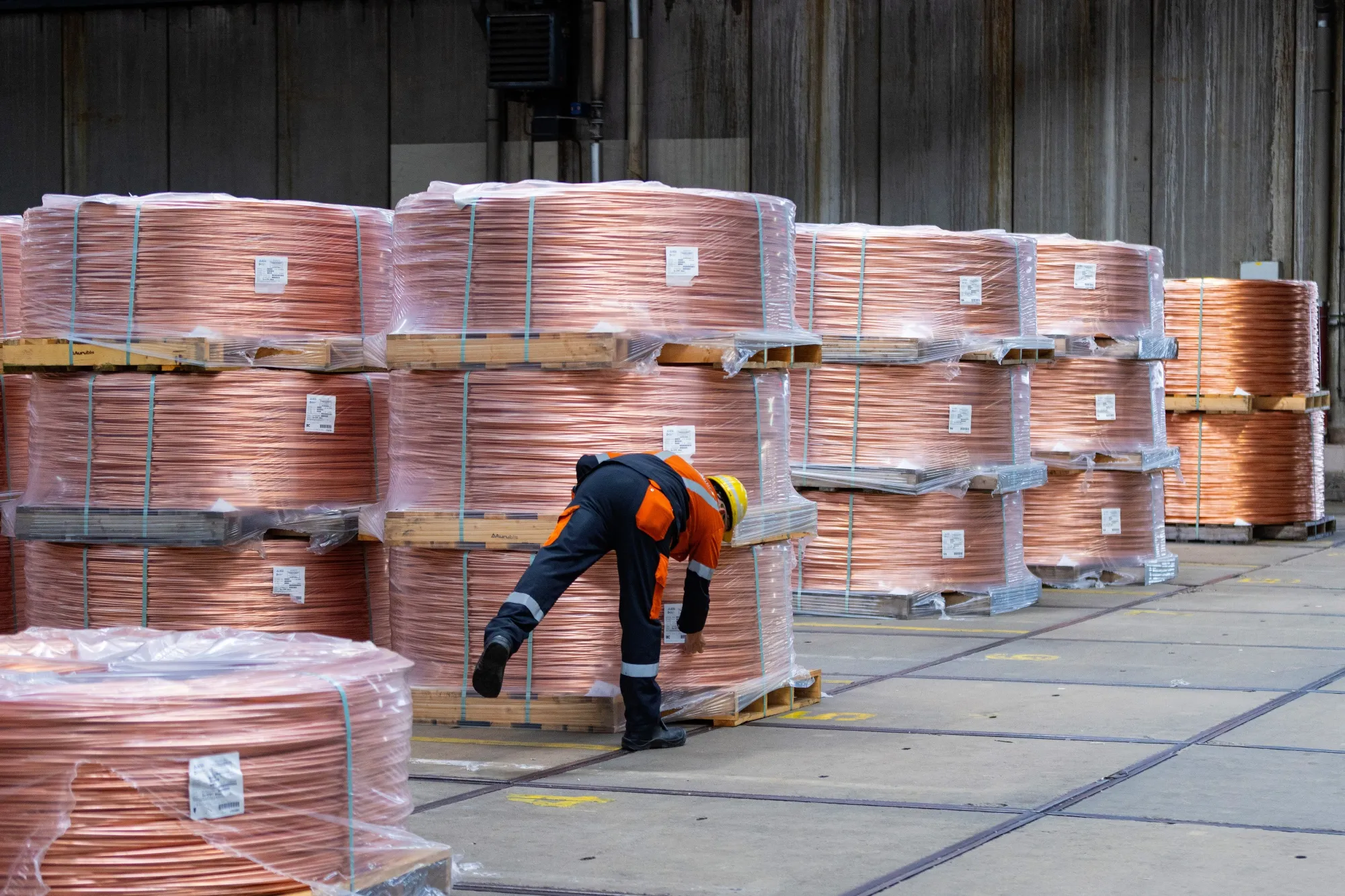
Goldman Sachs is urging caution as copper prices surge to new records, saying the metal’s climb above $11,000 per tonne is unlikely to be sustained given still-adequate global supplies.
In a research note this week, analysts led by Aurelia Waltham said the latest rally is driven more by expectations of future tightness than by current market fundamentals. As a result, they do not expect prices to remain at recent highs.
Copper recently hit an all-time record of $11,540 a tonne on the London Metal Exchange, propelled by fears of a supply squeeze and increased shipments of the metal into the United States ahead of potential trade tariffs.
Market worries escalated after Mercuria Energy Group warned of “extreme” distortions in physical copper flows. At an industry conference in Shanghai, Kostas Bintas, Mercuria’s head of metals, said that persistent U.S.-bound shipments could create shortages in China and elsewhere, despite softening demand. Although global consumption has weakened, he cautioned that non-U.S. markets could face a shortage of copper cathodes.
Goldman pushes back
Goldman Sachs, however, offered a more restrained outlook. While acknowledging that inventory levels outside the U.S. have tightened, the bank said regional premiums and narrower London Metal Exchange spreads could help prevent critically low stockpiles.
The bank now projects a smaller global surplus of about 160,000 tonnes in 2026 — a shift that brings the market closer to balance but still far from a structural shortage. Analysts expect copper prices to remain “constricted” within a range of $10,000 to $11,000 per tonne next year.
Longer-term outlook
Copper has a track record of dramatic price projections that often fail to materialize, and despite several major mine disruptions expected into 2026, global demand growth has softened. Strong consumption from clean-energy sectors has not offset broader weakness.
Goldman does not expect a persistent global supply deficit to emerge until at least 2029. The bank noted that demand this year is still estimated to fall short of supply by around 500,000 tonnes. A key drag is the Chinese market, where fourth-quarter consumption is forecast to drop nearly 8% from a year earlier.