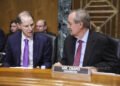

President Donald Trump said Sunday that he has made up his mind about who he will nominate as the next chair of the Federal Reserve and plans to announce the choice “soon.” He declined to name the individual, but the frontrunner remains Kevin Hassett, the director of the White House National Economic Council and a long-time Trump economic adviser.
Markets have reacted quickly to the news: on prediction platforms such as Kalshi and others, odds favouring Hassett have surged over the past week, rising from under 40% to as high as 64%, indicating growing confidence that he will be the nominee.
Hassett has publicly stated that he would be willing to serve as Fed chair if selected. On Sunday he reiterated his support for policies aligned with Trump’s agenda, including interest-rate cuts — a stance that aligns with Wall Street’s hopes for easier access to credit and looser monetary policy.
Still, Hassett is not the only contender. Other finalists reportedly under consideration include current Fed governors such as Christopher Waller and Michelle Bowman, as well as former Fed governor Kevin Warsh and other industry figures — though none have matched Hassett’s sudden rise in market-driven odds. I
Economists and market watchers warn that naming a new chair is about more than politics — it could reshape U.S. monetary policy for years. Many expect a move toward more aggressive rate cuts if the nomination goes to someone like Hassett, who has criticized the current Fed leadership for being too slow to reduce borrowing costs. That prospect already appears to have affected bond yields and currency markets.
With the term of current Fed Chair Jerome Powell ending in May 2026, markets and analysts are watching closely. The next weeks may prove pivotal — not only for who leads the central bank, but also for the direction of interest-rate policy, the dollar, and global markets.