
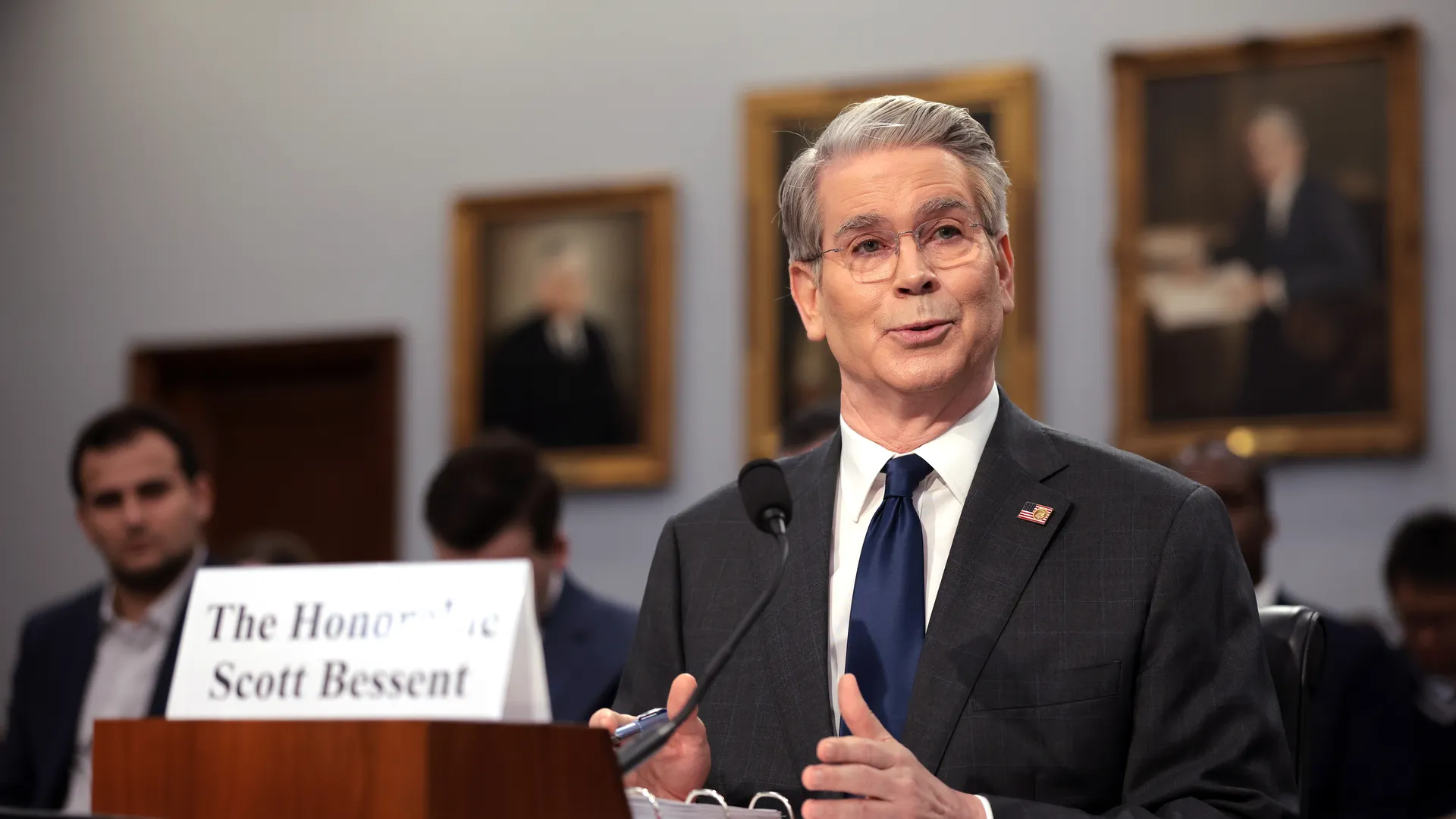
U.S. Treasury Secretary Scott Bessent said Sunday that the American economy is finishing 2025 with unexpected momentum, pointing to a robust holiday shopping season and resilient consumer spending. Speaking on CBS’s Face the Nation, Bessent projected that real GDP growth will close out the year at roughly 3%, despite political turmoil in Washington.
“The economy has been better than we thought,” he said. “We’ve had 4% GDP growth in a couple of quarters, and we’re going to finish the year — despite the Schumer shutdown — with 3% real GDP growth.”
Federal data paints a mixed picture. The Bureau of Economic Analysis reported that GDP contracted 0.6% year-over-year in the first quarter before rebounding sharply to 3.8% growth in the second. Updated third-quarter figures are expected on December 23. The Atlanta Federal Reserve’s latest GDPNow model, released December 5, estimates Q3 annualized growth at 3.5%.
Consumers remain pessimistic
Despite solid economic output, Americans remain uneasy about their financial outlook. Consumer sentiment — measured by the University of Michigan’s monthly survey — rose modestly to 53.3 in December but remains far below last year’s levels and historically depressed. Economists note that high prices, elevated borrowing costs, and economic uncertainty continue to weigh heavily on household confidence.
Inflation, though cooling from its 2022 peak, continues to challenge consumers. The most recent inflation report — delayed by the federal shutdown — showed prices rising 3% year-over-year in September. Grocery costs climbed 3.1%. While energy prices have retreated from early-year highs, categories such as rent and services remain sticky, according to analyses from the Cleveland Fed and Bloomberg Economics.
Labor conditions, meanwhile, have softened. Layoff announcements surpassed 1.1 million in 2025, the highest since the 2020 pandemic year, according to Challenger, Gray & Christmas. ADP reported a surprise decline of 32,000 private-sector jobs in November.
Political debate intensifies
President Donald Trump has dismissed concerns about affordability, arguing that Democrats invented the concept as a political tactic. “The word ‘affordability’ is a con job by the Democrats,” Trump said during a Cabinet meeting last week.
But public opinion doesn’t align with the administration’s messaging. A recent NBC News poll found that nearly two-thirds of registered voters believe the Trump administration has fallen short in addressing the cost of living. Other polls from Gallup and Ipsos similarly show that Americans’ top concerns continue to be inflation and economic security.
Asked about Trump’s comments, Bessent defended the administration’s record and argued that much of today’s inflationary pressure stems from the previous administration. He also suggested that media narratives contribute to consumer pessimism.
“The American people don’t know how good they have it,” Bessent said. “Democrats created scarcity — in energy, through over-regulation — and that’s why we have this affordability issue. I think next year we’re going to move on to prosperity.”
A strong finish amid contradictions
Economists note that the disconnect between economic data and public sentiment has been one of the defining features of the post-pandemic recovery. Retail analysts, including Mastercard SpendingPulse and Adobe Analytics, reported higher-than-expected holiday sales this season, supported by rising incomes and easing supply chains.
Still, some forecasters warn that elevated interest rates, shrinking household savings and slower job growth could weigh on consumer spending in early 2026. The Federal Reserve has signaled it will remain cautious, even as core inflation eases toward the central bank’s 2% target.
For now, Bessent maintains that the U.S. is headed for a solid year-end finish. Whether consumers feel the lift — or remain skeptical — will be a key factor in shaping the political and economic climate heading into 2026.