Domestic processing reshapes non-ferrous recovery
Global forces are pushing recyclers toward keeping critical materials within regional markets rather than shipping mixed scrap abroad. The industry is witnessing a shift toward processing and refining feedstock closer to where materials are collected, with policymakers also hinting at stricter export controls. This trend is driving demand for higher-purity fractions earlier in the recycling line and prompting facilities to invest in more capable sorting technologies that can separate metals into finer categories and alloy groups.
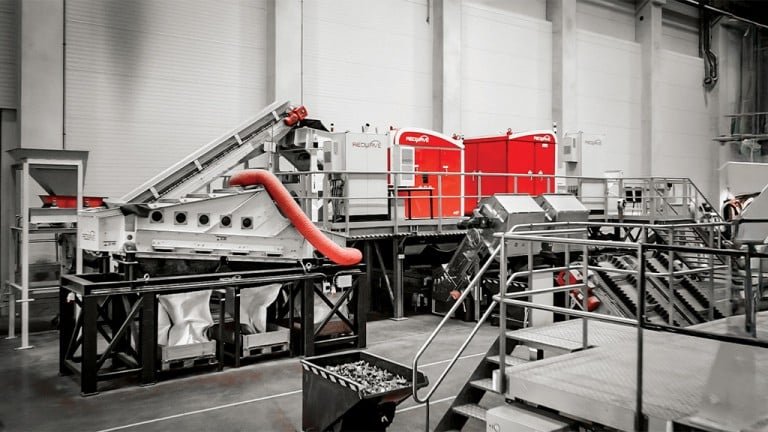
In this environment, leaders in sensor-based sorting are retooling systems to deliver cleaner streams and more valuable outputs. For REDWAVE, a provider of sorting solutions based in Austria, the emphasis is on expanding the capabilities of XRF sorting platforms to meet evolving market needs and regulatory expectations while supporting more localized processing strategies.
Aluminum takes center stage in processing upgrades
While heavy metals like copper and brass have long shaped sorting priorities, aluminum now commands the majority share of non-ferrous volume and is driving new technology development. Industry estimates place aluminum at roughly 80 to 85 percent of non-ferrous metals, and demand is rising each year. Consequently, the focus is shifting toward producing distinct aluminum grades and improving separation within shredded fractions to prevent downcycling and boost value.
Developers are prioritizing the ability to distinguish between wrought and cast aluminum and, over time, to classify aluminum by series or alloy. This attention to alloy-level separation aims to unlock higher-value streams from what has historically been a single aluminum category, with ongoing discussions about standards such as newly introduced scrap specifications guiding the direction of sorting improvements.
Advancements in XRF sorting and spectrum-wide analysis
To address these needs, REDWAVE is advancing its X-ray fluorescence systems, which are widely used for elemental analysis in non-ferrous recovery. The goal is to improve identification accuracy and expand the range of fractions that can be recovered from aluminum streams. Rather than relying on analysis of individual spectral peaks, the next step involves comparing broader spectral signatures to distinguish materials with greater precision.
In parallel with spectral techniques, image- and appearance-based characterization tools are being explored to enhance material recognition without altering the core sorting workflow. The overarching objective is to extend the number of recoverable product grades while maintaining efficiency and purity in the downstream streams.
Automation and data-driven operations
Beyond improvements in detection, automation is reshaping how facilities manage non-ferrous lines. Accurate feedstock characterization and pre-processing knowledge are increasingly essential for achieving higher sorting efficiency and cleaner outputs. Operators can optimize equipment settings and pre-processing steps if they understand the input material well.
Data analytics are also playing a growing role in plant performance. Predictive maintenance and process optimization may help determine which product streams yield the greatest value under current market conditions, influencing decisions across production, logistics, and maintenance planning.
Addressing challenges and opportunities in fine fractions
Despite progress, industry challenges remain, particularly in aluminum recovery where specifications continue to evolve and certain alloy groups remain difficult to detect and separate with existing technology. Ongoing research and development seek to improve detection capabilities for these alloys while maintaining robust performance across diverse input streams.
Meanwhile, attention is turning to finer material fractions that were historically discarded. Sub-half-inch material often ended up in landfills, yet there is growing recognition of the potential value in these fines. Recovering this material could generate additional revenue and reduce disposal costs, reinforcing the case for more versatile sorting and processing configurations.
Flexibility as the strategic investment goal
As technology, markets, and material flows continue to evolve, flexibility has emerged as the defining attribute for new systems. The ability to adapt to price shifts, new product requirements, and emerging recycling applications is now a core consideration for facility owners and operators. Rather than pursuing a single-specification solution, the industry is prioritizing adaptable platforms designed to accommodate a range of metals, alloys, and end-market needs over time.
The combined effect of enhanced sorting precision, broader material separation, and more responsive automation points toward a future where non-ferrous recovery relies on data-informed decision making and high-purity outputs. In this environment, the sorting technology itself is increasingly central to maximizing resource recovery while supporting regional processing objectives.