
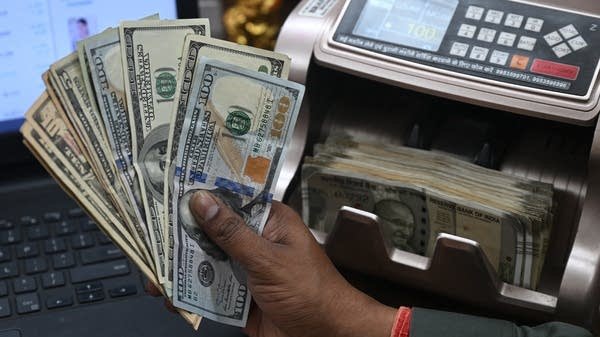
The U.S. dollar traded largely unchanged on Wednesday after private payrolls data showed weaker-than-expected job growth, reinforcing market caution ahead of Friday’s key government employment report.
According to data released by ADP, U.S. private employers added 41,000 jobs in December, falling short of economists’ expectations for a 48,000 increase. The report also revised November figures downward, showing a loss of 29,000 jobs instead of the previously reported decline of 32,000, highlighting continued softness in the labor market that has emerged toward the end of the year.
Despite the data miss, currency markets showed little reaction. The dollar index (DXY), which measures the greenback against a basket of major currencies, traded flat around 98.60, indicating that investors are largely waiting for clearer signals from upcoming economic releases.
Market participants are now turning their attention to Friday’s U.S. nonfarm payrolls report, which is expected to play a pivotal role in shaping expectations for the timing and pace of the Federal Reserve’s next interest-rate cut. A further cooling in employment growth could strengthen the case for easing later this year, while stronger data may delay such expectations.
Structural Pressures on the Dollar
Beyond near-term data, analysts warn that the dollar faces broader structural headwinds in 2026. According to analysts at Amundi Investment Institute, fading U.S. economic exceptionalism and ongoing uncertainty around trade tariffs are weighing on the currency’s medium-term outlook.
Amundi slightly upgraded its U.S. growth forecast for 2026 to 2.0% from 1.9%, but emphasized that growth is still expected to remain below potential. The firm also expects the Federal Reserve to deliver two additional rate cuts this year, further limiting upside for the dollar.
Political uncertainty surrounding the selection of the next Federal Reserve chair is adding another layer of caution. However, analysts suggest that the policy direction is unlikely to change significantly, noting that President Donald Trump has consistently advocated for looser monetary conditions.
Reflecting these factors, Amundi downgraded its stance on the dollar to “cautious,” signaling limited confidence in sustained dollar strength despite its recent stability.
For now, the greenback remains rangebound as investors balance near-term economic data against longer-term policy and structural considerations, with Friday’s jobs report likely to provide the next major catalyst for currency markets.