Upstream Pre-Shredding Reduces Wear and Risk in Scrap Processing
Attar Metals, a Mississauga based recycler, found that protecting the shredder starts upstream. By reorganizing material flow and adding a pre-processing stage, the company cut wear, downtime and risk on its high-speed rotor.
Prior to 2023, material was fed directly into the shredder line. The load on the shredder was heavy, leading to frequent wear and downtime, with effects rippling through engines and conveyors. Safety concerns rose when oversized or hazardous items could enter the mill and trigger high-energy events.
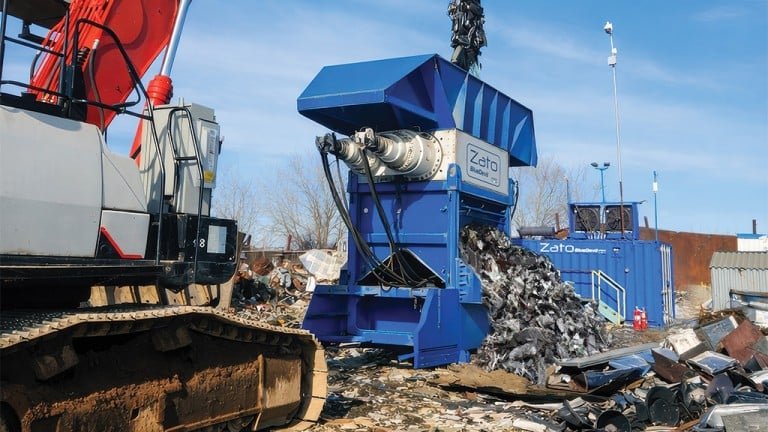
In 2023, Attar installed a low-speed pre-shredder from Zato, positioned ahead of the main shredder. The Blue Devil uses twin shafts and high torque to shear material at a controlled pace, rather than relying on rapid impact. It gradually opens and reduces incoming scrap, delivering a more uniform feed to the hammermill while limiting friction and spark potential.
In addition to feeding improvements, the pre-shredder can operate as a standalone unit for certain applications, including aluminum scrap or busheling. At Attar, this staged approach reduces bulk, exposes enclosed components, and creates a steadier, lower-risk flow into the primary shredder.
The change meant fewer high-energy events inside the shredder, lower heat and spark generation, and a more predictable process overall. By taking the initial stress out of the system, Attar shifted the bottleneck away from the rotor and toward upstream handling.
Measurable results followed. Downtime declined, and maintenance demands on the shredder fell as wear on hammers, liners and internal components diminished. The company estimates a roughly 30 percent reduction in shredder maintenance costs, a figure seen as highly meaningful in an operation where uptime directly affects profitability. The benefits extended beyond the shredder itself, with quieter shock loads and less strain on conveyors, bearings and downstream equipment.
Safety improved as well, since oversized and potentially hazardous materials are conditioned at a slower, controlled pace before reaching the rotor, reducing the likelihood of dangerous events inside the mill.
Choosing the right pre-processing solution involved thorough evaluation. Attar compared how each option would fit the existing line, maintenance expectations, and post-sale support. Visits to live sites in Ontario and Illinois helped demonstrate performance under real scrap conditions, strengthening confidence in the decision.
Ongoing supplier support remains a key consideration. Modern pre-shredders are highly capable but require reliable service and parts access to maximize uptime.
Looking ahead, Attar Metals plans cautious expansion while navigating an uncertain market. The company notes that feedstock procurement is increasingly complex, with more parties involved in material sourcing and more variables to manage. In this climate, uptime, reliability and risk reduction drive investment as much as throughput.
For operators weighing upstream conditioning, three practical considerations emerge: safety as the top priority, a clear fit for your material stream, and strong supplier support that can sustain performance over time.
- Safety as the top priority
- A clear fit for the line’s material mix and throughput
- Reliable supplier support and service
By conditioning scrap before it reaches the rotor, Attar Metals reframed shredder performance as a system-wide reliability challenge rather than a single piece of equipment. The approach reflects a broader shift in the scrap recycling sector toward upstream controls as a path to safer, more predictable operations.