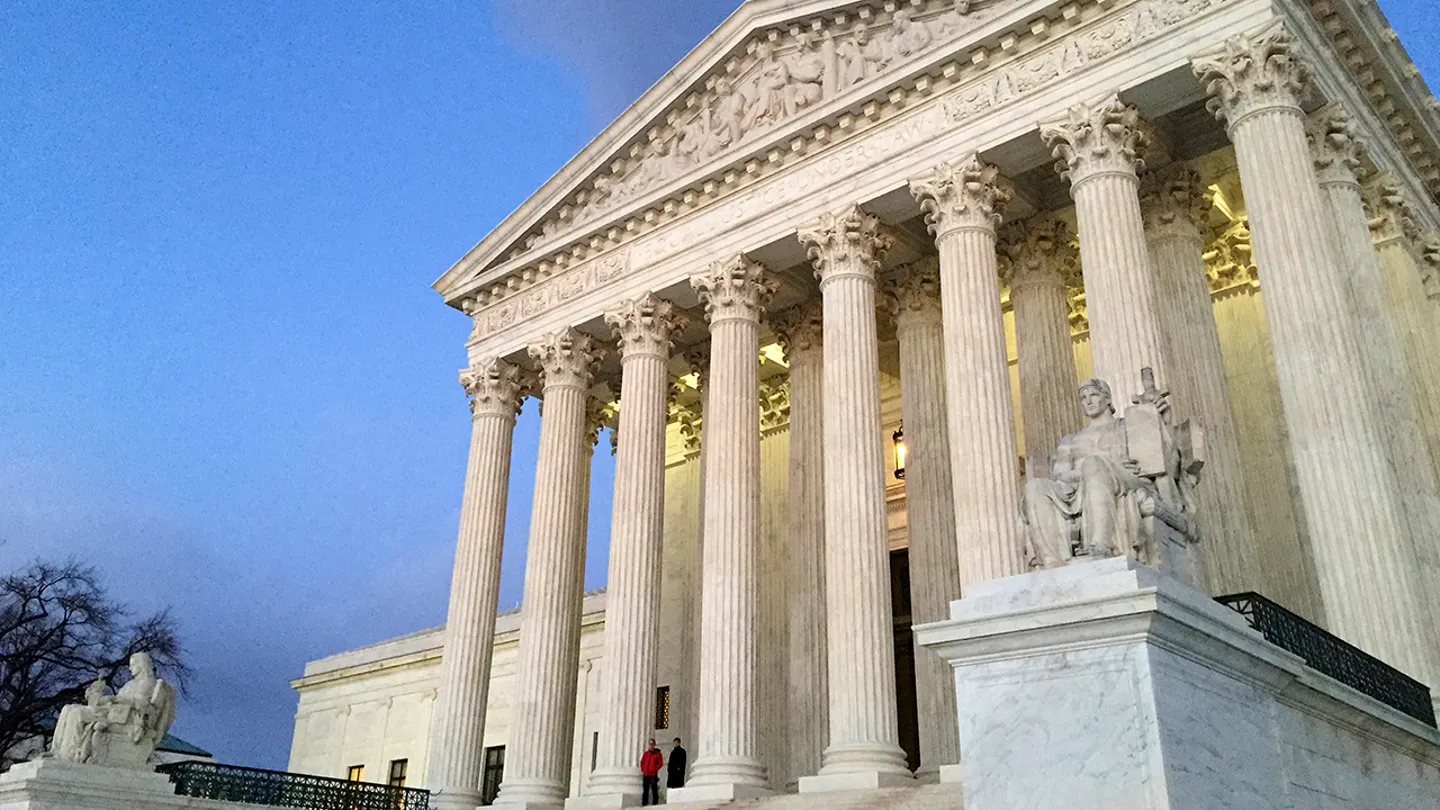
A closely watched Supreme Court ruling on President Donald Trump’s sweeping tariff program could arrive as early as Friday, potentially reshaping U.S. trade policy and financial markets at a moment of renewed economic optimism.
The Court has scheduled Feb. 20 as its next opinion release date following a month-long recess. Among the pending cases is a challenge to the administration’s use of emergency powers to impose broad tariffs on imported goods, including products from China, the European Union, and several emerging-market economies. Legal experts say a decision against the White House could temporarily invalidate significant portions of the tariff regime and trigger uncertainty across global supply chains.
A High-Stakes Legal Question
At the center of the dispute is whether the president exceeded his authority under statutes such as the International Emergency Economic Powers Act (IEEPA) in declaring trade imbalances and national security concerns as justification for across-the-board duties.
The administration has argued that the tariffs are necessary to protect domestic manufacturing, counter unfair trade practices, and reduce reliance on foreign supply chains. Opponents—including a coalition of importers, retailers, and trade groups—contend that Congress, not the executive branch, holds constitutional authority over tariffs and taxation.
A ruling that curtails executive authority could force the administration to unwind or renegotiate tariffs, at least temporarily. Analysts say such a move could have immediate market implications, particularly for sectors sensitive to trade policy such as industrials, technology hardware, and consumer goods.
Markets Riding High
The legal uncertainty comes as U.S. equities continue to push higher. The Dow Jones Industrial Average recently crossed the 50,000 mark for the first time, reflecting investor confidence in economic resilience and corporate earnings growth.
Recent economic data have also surprised to the upside. Inflation readings showed continued moderation, while labor market reports indicated steady job creation and stable wage gains. Treasury yields have fluctuated but remain below last year’s peaks, reinforcing expectations that the Federal Reserve may have room to ease policy later this year.
Administration officials have seized on the data to defend the tariff strategy.
White House trade adviser Peter Navarro said on Fox News that the economy’s strength is “happening because of tariffs, not in spite of them,” arguing that the measures have boosted domestic investment and reshored production.
“Everything is hitting on all major cylinders,” Navarro said. “And the best is yet to come.”
Business Community Divided
The business response to the tariffs has been mixed. Domestic steel and aluminum producers have credited the duties with stabilizing prices and encouraging capital investment. Some manufacturers report expanded hiring tied to supply-chain relocation.
However, retailers, automakers, and agricultural exporters have warned of higher input costs and retaliatory measures abroad. Several multinational companies have cited tariffs as a factor in earnings calls, pointing to increased logistics expenses and pricing pressures.
Economists remain divided over the broader impact. Some studies suggest tariffs have modestly increased consumer prices, while others argue they have accelerated strategic decoupling from geopolitical rivals and strengthened domestic capacity in key industries such as semiconductors and battery production.
What Happens Next?
If the Supreme Court upholds the administration’s authority, it would likely cement the use of emergency powers in trade policy and embolden future executive actions. Markets might initially interpret such a decision as reducing uncertainty, though longer-term concerns about global retaliation could persist.
Conversely, if the Court rules against the administration, the immediate reaction could include sharp moves in currency and equity markets as investors reassess trade flows and corporate margins. Congress could also be drawn more directly into trade policymaking, potentially slowing the pace of new tariffs or trade restrictions.
With global supply chains already strained by geopolitical tensions and shifting industrial policy, the decision could reverberate beyond Wall Street.
For now, investors and businesses alike are watching the Court’s calendar closely. A ruling this week could redefine the balance of power in U.S. trade policy—and test whether the market’s recent record-setting rally can withstand a major legal shock.